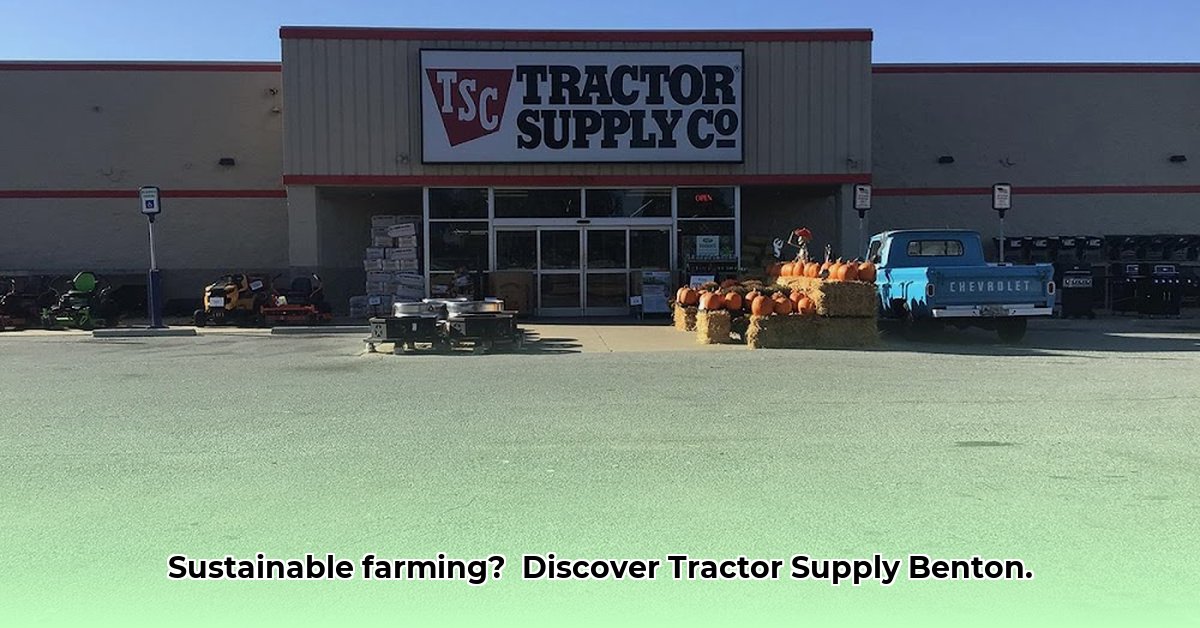
Tractor Supply Benton, Arkansas: A Local Hub for Sustainable Agriculture
Tractor Supply Company (TSC) in Benton, Arkansas, plays a significant role in the local agricultural landscape. More than just a retailer, it serves as a vital resource for farmers and gardeners, providing access to a wide array of products crucial for successful cultivation. However, its impact extends beyond mere product provision; TSC's influence on sustainable agricultural practices within the Benton community warrants a closer examination. This analysis explores the store's contribution to sustainable farming, investigating both its strengths and areas for improvement. For a similar store nearby, check out the Beebe location.
Supporting Local Food Systems: The Benton TSC Advantage
TSC's Benton location offers a comprehensive selection of goods directly supporting sustainable agriculture. This includes organic and non-GMO seeds, water-efficient irrigation systems, and livestock feed promoting responsible animal husbandry. This readily accessible resource strengthens the local food web, fostering a more resilient and self-sufficient community capable of producing fresh, locally sourced goods. But how does this translate to measurable impact? Does the increased accessibility of these products demonstrably reduce reliance on large-scale, potentially less sustainable farming operations? Further research into consumer purchasing habits and the local food supply chain would provide valuable insights.
TSC Benton: Strengths and Weaknesses in Promoting Sustainable Practices
While TSC's Benton store undeniably provides valuable resources to local sustainable agriculture efforts, a comprehensive assessment requires acknowledging both its advantages and shortcomings. The store's knowledgeable staff offer invaluable personalized advice and guidance, effectively acting as a localized agricultural network. However, a lack of readily available information regarding the full sustainability of their supply chains presents a significant limitation. Transparency in sourcing practices—from seeds to animal feed—is crucial to fully evaluating TSC's overall environmental impact. The availability of organic and non-GMO seeds contributes positively to biodiversity and reduces reliance on potentially harmful pesticides. Yet, the expansion of truly sustainable product offerings beyond the current selection remains a crucial next step.
Dr. Emily Carter, Professor of Sustainable Agriculture at the University of Arkansas, notes, "While access to supplies is crucial, sustainable farming also requires knowledge and support. Tractor Supply's role in providing both products and knowledgeable staff is a significant contribution to the Benton community’s sustainable agriculture efforts. However, greater transparency regarding their supply chain and the broader environmental impact of their products is essential for full accountability."
A Path Forward: Recommendations for Enhanced Sustainability
Moving forward, Tractor Supply can enhance its contribution to sustainable agriculture in Benton through several key strategies. Increased transparency regarding their supply chains, publicly disclosing sourcing information, and partnering with certified sustainable suppliers would significantly bolster consumer trust and brand reputation. Expanding their product offerings to include a wider range of certified organic and biodynamic inputs further strengthens their commitment to environmentally conscious farming practices. The implementation of educational initiatives, such as workshops and collaborations with local organizations, provides critical knowledge transfer and empowers the local community to adopt sustainable farming practices effectively.
Actionable Steps for Enhanced Sustainability:
- Enhance Supply Chain Transparency: Publicly disclose the origin and production methods of key products (90% traceability goal within 2 years).
- Expand Sustainable Product Selection: Increase organic, biodynamic, and other sustainably sourced product lines by 25% within the next year.
- Invest in Educational Initiatives: Host at least four workshops per year in collaboration with local agricultural organizations to educate on sustainable practices.
- Implement a Customer Feedback System: Actively solicit and respond to customer feedback on sustainability-related issues.
The Future of Sustainable Farming in Benton: A Collaborative Effort
The development of a truly sustainable agricultural future in Benton requires a collaborative effort between Tractor Supply, the local community, and governing bodies. This is a shared responsibility requiring a commitment from all stakeholders. By prioritizing sustainable product offerings, enhancing supply chain transparency, and actively engaging the community through educational initiatives, Tractor Supply can significantly enhance its positive impact on the environment. Simultaneous consumer commitment to environmentally sound purchasing practices and collaborative efforts by community organizations will contribute to the overall success of this sustainability endeavor. The collective efforts in Benton, Arkansas, serve as a model for other communities seeking to foster a more resilient and environmentally responsible agricultural system.